


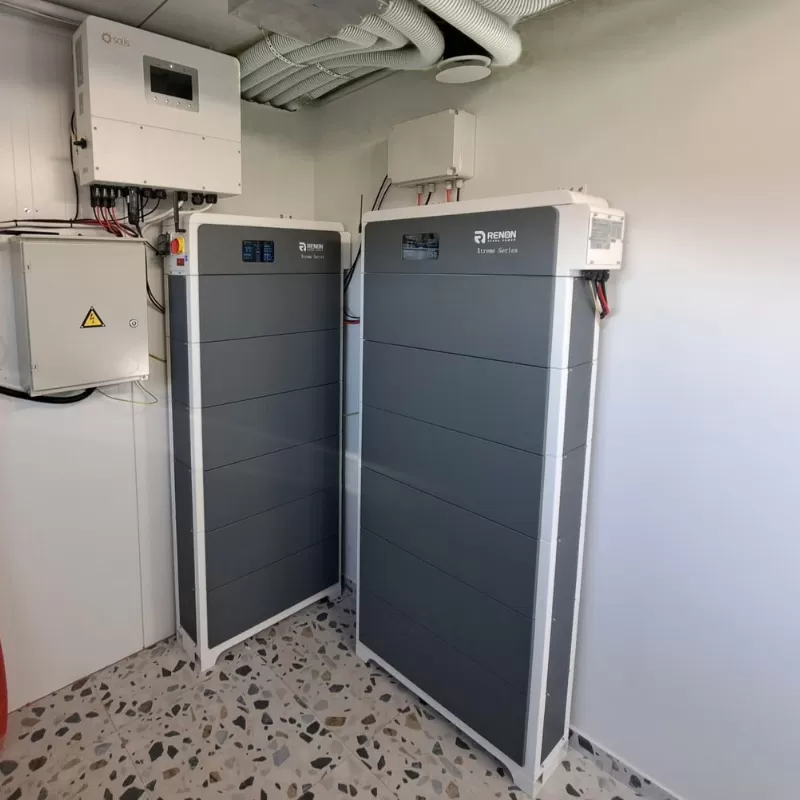
It’s a good idea to choose the location for your energy storage unit before purchasing the equipment. That way, you can plan the electrical connections, prepare the foundation, and leave space for maintenance. When choosing a location, the most important factors to consider are temperature, air circulation, and the installation requirements for the specific model.
Temperature
Each manufacturer specifies the ambient temperature range within which a specific storage unit can operate. The permissible temperature range and optimal operating conditions may vary. In extreme heat or cold, the storage unit may charge or discharge energy at a reduced rate. Prolonged heat can also accelerate battery wear. If the storage unit is installed indoors, nearby heating devices and other heat-emitting equipment must be taken into account. When installing outdoors, choose a location that takes into account direct sunlight and seasonal temperature fluctuations. The storage unit’s heating and cooling system must be adapted to the expected conditions.
Air Circulation
When operating, the storage unit itself emits heat. To ensure proper cooling of the equipment, the clearances specified by the manufacturer must be maintained around it, and the ventilation openings must be kept open. The installation instructions for each heat accumulator typically specify how much space to leave from the walls, above the heat accumulator, and between individual units. These distances are crucial for airflow and equipment maintenance. The room should be ventilated so that the heat emitted by the storage unit is dissipated and the temperature remains within the limits specified by the manufacturer.
Indoors or Outdoors?
The heat storage unit can be installed in a location approved by the manufacturer: a utility room, a garage, or outdoors. Each location is evaluated based on the requirements of the specific model. If installed indoors, humidity, dust levels, and the risk of water ingress must be checked. In a garage, the storage unit should be placed where it is not at risk of accidental impact from a vehicle. When installing the storage unit near work or rest areas, the noise from fans and other cooling equipment must be evaluated. If the battery is installed outdoors, a foundation capable of supporting its weight must be constructed. Provision must be made for rainwater drainage and convenient access to the equipment. The dust and water protection rating of each battery is verified according to the manufacturer’s documentation.
Connections and Maintenance
When selecting a location, the distance to the electrical panel and the cable routing path are evaluated. The installer also provides connection points for system monitoring and control. Sufficient space is left around the battery for inspection, repair, and part replacement. If you plan to increase storage capacity in the future, it’s worth reserving space for additional equipment in advance. The final installation location for the battery is selected by the designer or installation specialist after assessing the site and reviewing the manufacturer’s instructions. Choose a time that works for you and schedule a consultation. Let’s discuss where an energy storage system can be installed at your facility.